
+918048809459

Currently it only shows your basic business info. Start adding relevant business details such as description, images and products or services to gain your customers attention by using Boost 360 android app / iOS App / web portal.

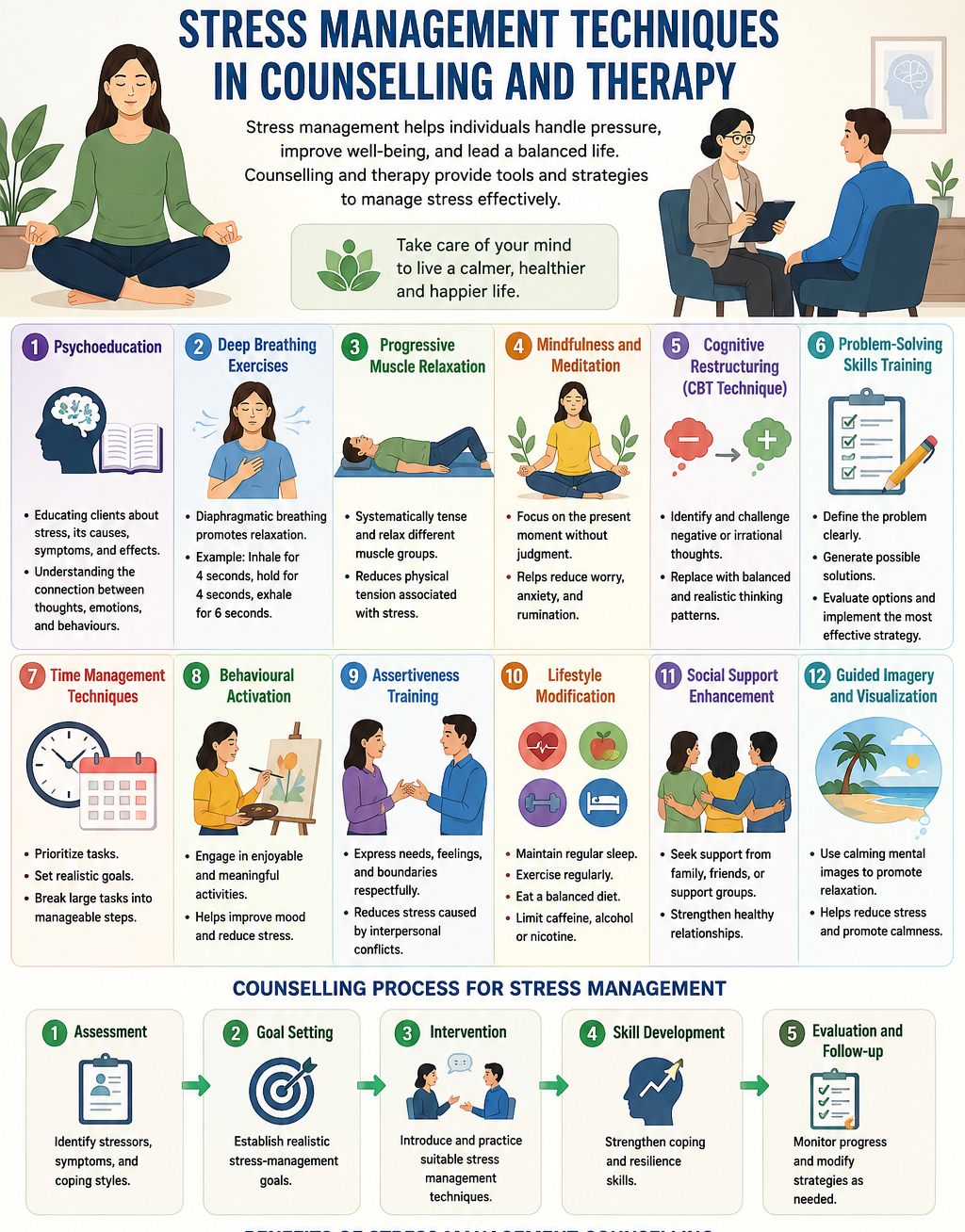
Stress Management Techniques in Counselling and Therapy Stress management in counselling and therapy focuses on helping individuals identify stressors, develop healthy coping strategies, and improve emotional well-being. Some commonly used techniques include: 1. Psychoeducation * Educating clients about stress, its causes, symptoms, and effects on physical and mental health. * Helping them understand the connection between thoughts, emotions, and behaviours. 2. Deep Breathing Exercises * Diaphragmatic breathing or belly breathing promotes relaxation. * Example: Inhale slowly for 4 seconds, hold for 4 seconds, and exhale for 6 seconds. 3. Progressive Muscle Relaxation (PMR) * Clients systematically tense and relax different muscle groups. * Reduces physical tension associated with stress. 4. Mindfulness and Meditation * Encourages focusing on the present moment without judgment. * Helps reduce worry, anxiety, and rumination. 5. Cognitive Restructuring (CBT Technique) * Identifying and challenging negative or irrational thoughts. * Replacing them with balanced and realistic thinking patterns. 6. Problem-Solving Skills Training * Defining the problem clearly. * Generating possible solutions. * Evaluating options and implementing the most effective strategy. 7. Time Management Techniques * Prioritizing tasks. * Setting realistic goals. * Breaking large tasks into manageable steps. 8. Behavioural Activation * Encouraging engagement in enjoyable and meaningful activities. * Helps improve mood and reduce stress. 9. Assertiveness Training * Teaching clients to express their needs, feelings, and boundaries respectfully. * Reduces stress caused by interpersonal conflicts. 10. Lifestyle Modification * Maintaining regular sleep patterns. * Engaging in physical exercise. * Eating a balanced diet. * Limiting excessive caffeine, alcohol, or nicotine use. 11. Social Support Enhancement * Encouraging clients to seek support from family, friends, or support groups. * Strengthening healthy relationships. 12. Guided Imagery and Visualization * Using calming mental images to promote relaxation and reduce stress. Counselling Process for Stress Management 1. Assessment: Identify stressors, symptoms, and coping styles. 2. Goal Setting: Establish realistic stress-management goals. 3. Intervention: Introduce and practice suitable techniques. 4. Skill Development: Strengthen coping and resilience skills. 5. Evaluation and Follow-up: Monitor progress and modify strategies as needed. Benefits of Stress Management Counselling * Improved emotional regulation. * Better decision-making and concentration. * Enhanced coping abilities. * Reduced anxiety and physical symptoms of stress. * Improved overall quality of life. Remember: Experiencing stress is a normal part of life, but learning effective coping strategies through counselling and therapy can help individuals manage it in healthier and more productive ways. Arunoday counselling clinic Indore Best psychologist Mental Health Therapist Marriage counsellor Child psychologist


